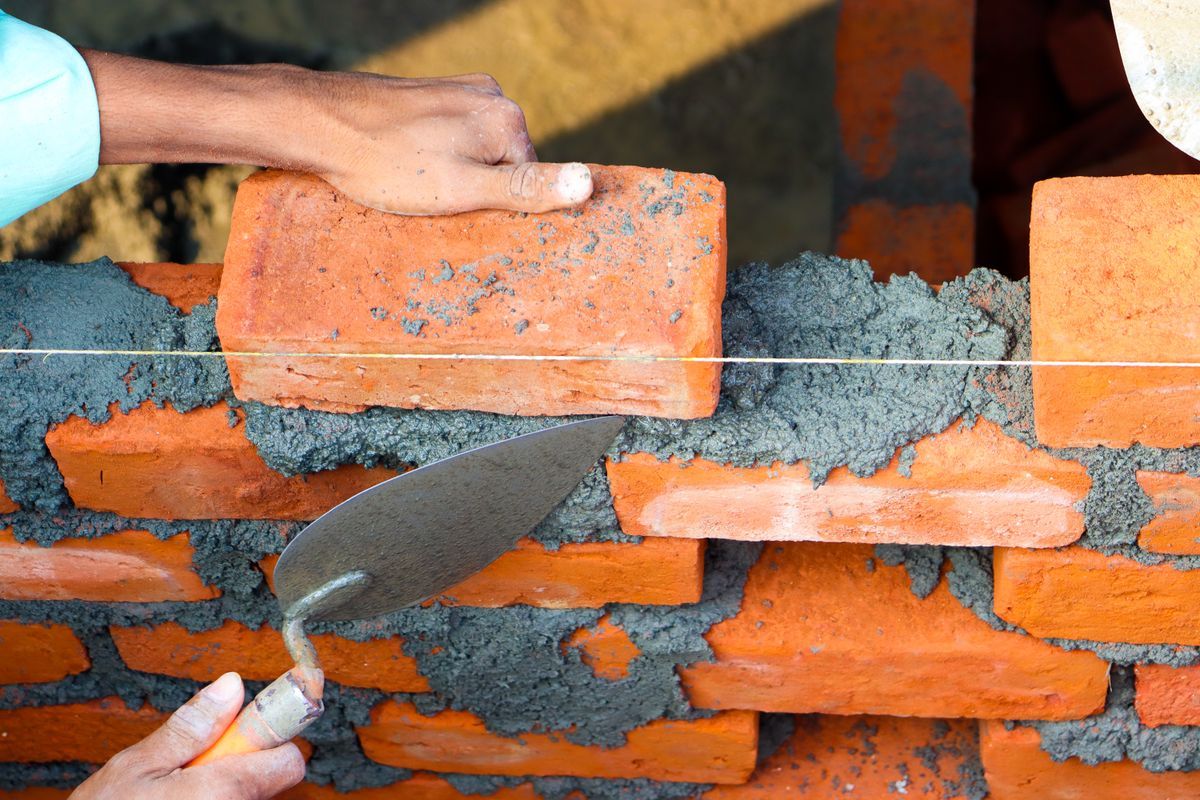
A bricklayer earns on average between €130 and €200 for a full day on the open market in 2026, according to the real quotes collected by Cronoshare. Pay under the collective agreement is another story: in tables like Madrid's, a skilled tradesperson's day comes to €67.36 gross, with bonuses and holiday pay on top. If this is your trade, understanding that gap is understanding what you live on.
Bricklayer pay per day: agreement and market at a glance
This table sums up the three realities of a day's pay: the legal minimum in the national agreement, the daily rate in the provincial tables, and what is actually paid for a single day.
| Item | Labourer | Semi-skilled | Skilled |
|---|---|---|---|
| National agreement minimum 2026 (BOE, gross/year) | €20,298.22 | €21,225.39 | €21,543.77 |
| Table rate (Madrid 2025, "day total") | €60.78 | €62.29 | €65.40 |
| Single market day | ~€100/day | €110–140/day | €130–200/day |
| Self-employed to end client | — | — | €150–220/day + VAT |
The market ranges come from Insertia and Cronoshare. They are indicative: they vary with the province, the type of work and how urgent it is. In big cities like Madrid, Barcelona or Bilbao, a skilled tradesperson's hour billed to a client runs €20–30.
Agreement pay vs market pay: two different day rates
When someone asks what a bricklayer earns a day, there are really two separate questions:
1. Agreement pay is what the provincial table sets for payroll. In Madrid, the BOCM of 31 Dec 2025 sets a 2025 "day total" (base plus supplements) of €65.40 for a skilled tradesperson and €60.78 for a labourer; in 2026 they rise to €67.36 and €62.61. Note: bonuses and holiday pay are separate, so a labourer's effective day comes to about €85–90 once everything is spread across the year.
2. Market pay is what is paid for a single day, with no permanent contract involved. There, a labourer is around €100/day, a semi-skilled worker earns €110–140 and a skilled tradesperson €130–200, according to Insertia. Cronoshare puts a bricklayer's hour at €18–25 on a national average, with minimum call-outs of 2–4 hours and travel of €15–30 (or €0.30–0.50/km).
Why does a single day pay considerably more than a table day? Because it covers immediate availability and travel, and creates no fixed overhead for whoever is hiring. Insertia itself sums it up: the difference between what is billed to the client and what is earned on payroll "can exceed 50%". And if you work for yourself, the reference goes up another step: a self-employed tradesperson invoices €150–220/day + VAT to an end client.
Bricklayer pay by province: official 2023-2026 tables
Construction agreements are provincial, so pay depends on where the site is. These are the tables verified in official gazettes (gross annual, total computation):
| Province | Table year | Labourer | Semi-skilled | Skilled | Source |
|---|---|---|---|---|---|
| Bizkaia | 2026 | €28,446.14 | €31,051.49 | €34,186.45 | BOB 2-2-2026, via salariojusto.es |
| Barcelona | 2026 | €27,351.74 | €30,053.74 | €32,178.55 | BOPB 17-3-2026 (UGT FICA) |
| Madrid | 2026 | €23,051.90 | €23,831.20 | €25,103.23 | BOCM 31-12-2025 |
| Zaragoza | 2024 | €23,039.35 | €26,099.00 | €28,132.46 | CCOO Hábitat Aragón |
| Murcia | 2025 | €22,091.75 | €23,250.34 | €23,667.20 | BORM 3-2-2026 |
| Málaga | 2023* | €19,999 | €20,382 | €20,721 | calculadornomina.es |
*The Málaga tables date from 2023 and are pending an update; Zaragoza's (2024) already have the 3.5% (2025) and 3% (2026) rises agreed.
Three quick readings of the table:
- The province matters, a lot. Between a labourer in Bizkaia (€27,510.78 already in 2025) and the Málaga tables there is more than €7,500 a year of difference for the same job. The agreement that applies is the one for the province where the site is, not where you live.
- Madrid adds its own extras. Its agreement creates an "on-site work incentive" of €147/month (€7/day over 21 days) for production staff, and a €150/day premium for working Saturdays, Sundays or public holidays under irregular scheduling. The annual working time is 1,736 hours.
- The north pays above average by the hour too. In Bizkaia, the 2025 ordinary hour is €19.45 for a skilled tradesperson and €16.18 for a labourer, according to the CCOO del Hábitat table.
In other provinces the exact figures are pending accessible publication, but the direction is the same: in A Coruña, the new 2025-2026 agreement signed for more than 40,000 workers adds up to a rise of over 8%, as reported by COPE.
🛟 Got gaps in your diary this week? On Freeday you can see single days near you in real time and get in touch directly. Fill your free days: sign up free — App Store · Google Play
Skilled, semi-skilled and labourer: how much the day rate changes by grade
The VII General Agreement for the Construction Sector sets the national floors by level. One detail the press often gets wrong: the ordinary labourer is Level XII (XIII covers trainees and apprentices, not the labourer). These are the exact figures from the BOE:
| Level | Grade | 2025 | 2026 |
|---|---|---|---|
| XII | Ordinary labourer | €19,707.01 | €20,298.22 |
| XI | Specialised labourer | €20,002.60 | €20,602.68 |
| IX | Semi-skilled | €20,607.17 | €21,225.39 |
| VIII | Skilled | €20,916.28 | €21,543.77 |
The agreement signed by CNC, CCOO del Hábitat and UGT FICA raises the tables by 3.5% in 2025 (after a prior 0.4% revision) and 3% in 2026, with an extra employer contribution to the sector pension plan of 0.5% and 0.25%. It covers more than 1.5 million workers. If you still see the figure "€18,457 for a labourer" quoted somewhere, discard it: that is the 2023 number, two years out of date.
On the market, the ladder shows up more sharply than in the tables: from labourer (~€100/day) to skilled tradesperson (€130–200/day) there is up to double per day, and a foreman reaches €150–220. There is detail on the entry rung in our guide to how much a construction labourer earns per day.
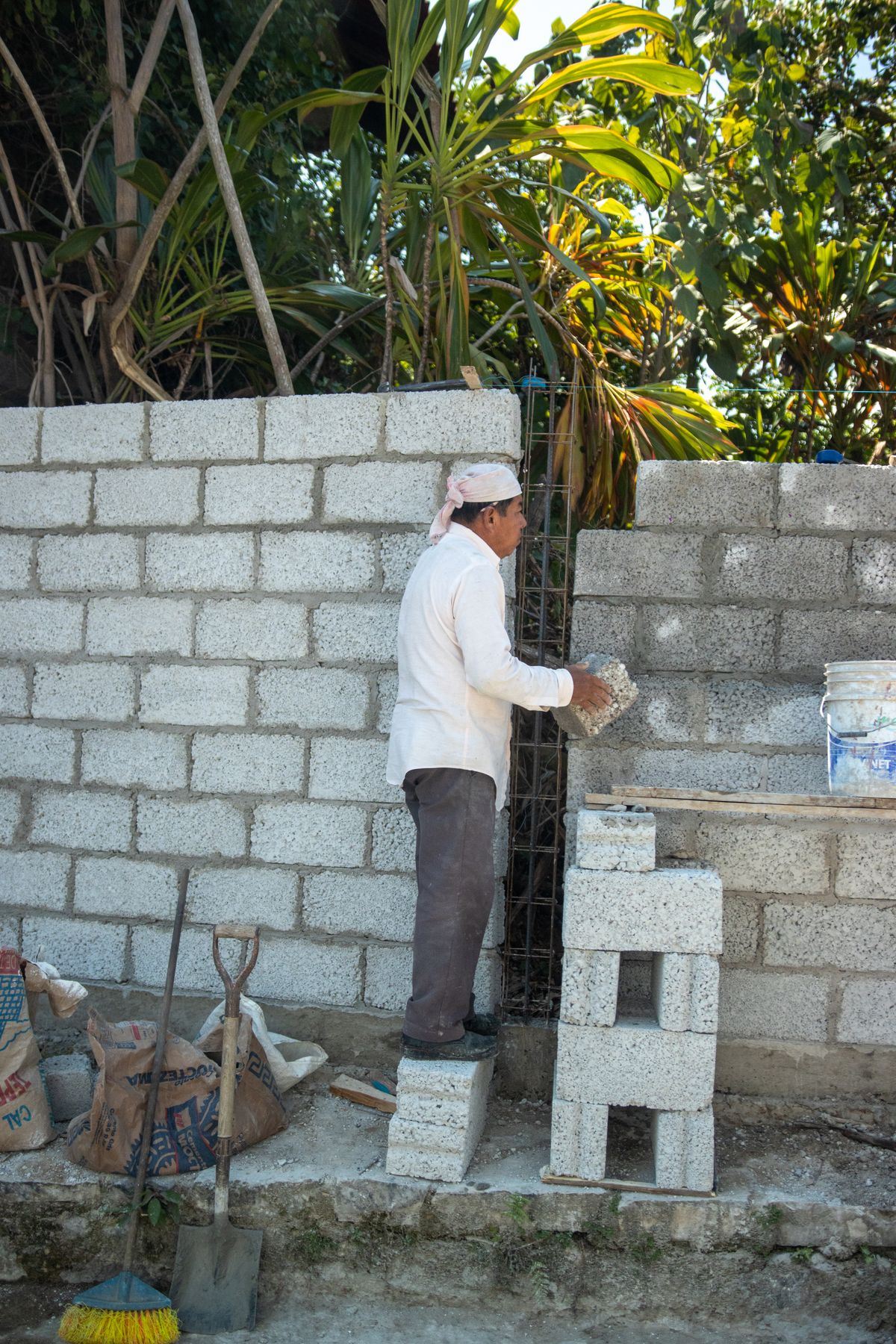 Photo: Fausto Hernandez · Pexels
When working (or hiring) by the day makes sense
If you are the one doing the work: a skilled tradesperson's payroll runs €1,700–2,200 gross a month according to Insertia. A single well-paid day is €130–200. Translation: every free day you turn into an invoiced day is almost pure margin, without committing to anything long term. And there is plenty of demand: the employers' body CNC estimates the sector is short of around 700,000 workers. If you work for yourself, the full play is in how to make money from the days you have free.
If you are the one hiring: when a trade lets you down or a peak of work arrives, paying €130–200 for a single day is cheap compared with having the site stopped and every other trade waiting. Hiring by the day gives you flexibility without carrying overhead. Here is the full plan B in case it happens to you: what to do when a trade drops out mid-project.
In both cases the bottleneck is the same: finding the other party today, not next week. That is exactly what Freeday solves, with geolocated availability in real time.
Frequently asked questions
How much does a bricklayer earn per day in Spain?
On the market, between €130 and €200 for a full day; a labourer is around €100 and a self-employed tradesperson invoices €150–220 + VAT to an end client. On payroll, the table rate comes to €60–67/day in agreements like Madrid's, with bonuses and holiday pay separate.
What is the minimum wage for a bricklayer under the 2026 agreement?
The national agreement sets a 2026 gross annual minimum of €21,543.77 for a skilled tradesperson, €21,225.39 for a semi-skilled worker and €20,298.22 for an ordinary labourer. These are national floors: each provincial agreement can improve on them, and Bizkaia and Barcelona exceed them by a wide margin.
How much does a self-employed bricklayer earn per day?
Between €150 and €220 + VAT per day to an end client. Out of that come social security contributions, income tax, travel and tools: it is not take-home pay.
Why does a single day pay more than an agreement day?
Because it covers immediate availability and travel, and creates no fixed overhead for whoever is hiring. According to Insertia, the difference between what is billed to the client and the payroll salary can exceed 50%.
In which provinces do bricklayers earn most?
Bizkaia leads the verified tables: €34,186.45 gross a year for a skilled tradesperson in 2026, against €20,721 in the Málaga tables (2023, pending an update). The agreement that applies is the one for the province where the site is.
How much does the construction agreement rise in 2025 and 2026?
3.5% in 2025 (plus a prior 0.4% revision under the guarantee clause) and 3% in 2026, with extra contributions to the sector pension plan of 0.5% and 0.25%. It was signed by CNC, CCOO del Hábitat and UGT FICA and covers more than 1.5 million workers.
🛟 Want to charge market rates for single days? On Freeday you post your availability and work by the day near you reaches you, in real time and with no subscription. Sign up free — App Store · Google Play