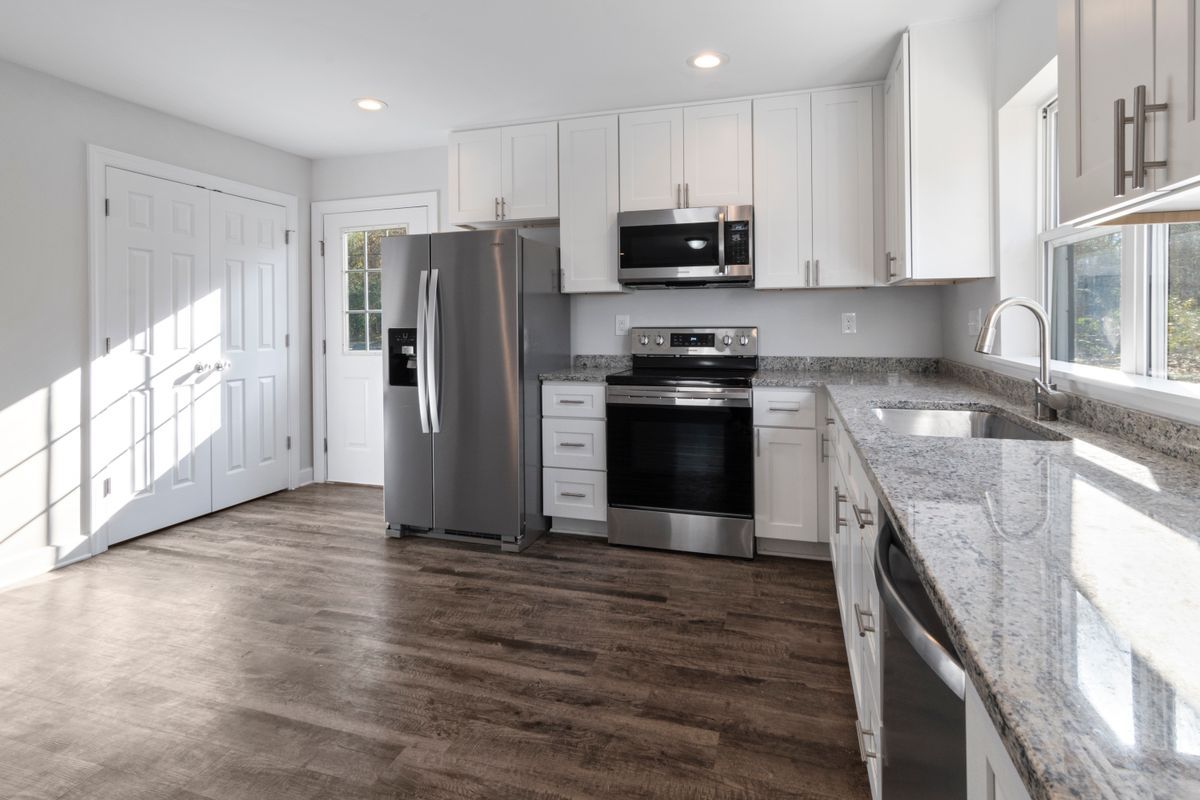
Renovating a kitchen costs between €4,000 and €10,000 in most cases in Spain in 2026, with a total range running from €2,000 to €15,000 depending on size and specification. The actual spend declared by households on a full kitchen renovation averaged €9,100 in 2025, according to ANDIMAC.
Kitchen renovation prices in Spain in 2026 (summary)
| Kitchen | Basic range | Standard | High range |
|---|---|---|---|
| Per m² | €600–900 | €800–1,100 | €1,200–1,800 |
| 6 m² | €3,600–5,400 | €4,800–6,600 | €7,200–10,800 |
| 8 m² | €4,800–7,200 | €6,400–8,800 | €9,600–14,400 |
| 10 m² | €6,000–9,000 | €8,000–11,000 | €12,000–18,000 |
How much does a kitchen renovation cost in 2026? Average price
As always with renovations, each source gives its own range. This is what the 2026 price guides say:
| Source | Average price | Usual range |
|---|---|---|
| Cronoshare | €4,000–10,000 (most common) | €2,000–15,000 |
| Habitissimo | €8,000 | €3,500–12,500 |
| ANDIMAC (actual spend on full renovation, 2025) | €9,100 | — |
The ANDIMAC figure is once again the most reliable anchor: it is declared actual spend, not an estimate. And it gives context: 6.6% of Spanish households renovated their kitchen in 2025, second only to the bathroom in the ranking of most renovated rooms.
Habitissimo also estimates an average of around €850/m², with real examples that help you place yourself: a 4 m² kitchen for €3,850, a 6 m² one for €5,688, a 10 m² one for €8,100 and a 20 m² one for €18,960.
Remember: indicative prices. They vary with the province, the state of the property and the project, and in big cities they tend to be 10–15% higher.
Kitchen renovation cost by range and size
The finish specification is what moves the budget most. Cronoshare sums it up like this per square metre in its 2026 guide: basic range €600 to €900/m², standard €800 to €1,100/m² and high range €1,200 to €1,800/m². Crossed with size:
| Size | Basic | Standard | High |
|---|---|---|---|
| 6 m² | €3,600–5,400 | €4,800–6,600 | €7,200–10,800 |
| 8 m² | €4,800–7,200 | €6,400–8,800 | €9,600–14,400 |
| 10 m² | €6,000–9,000 | €8,000–11,000 | €12,000–18,000 |
Where does the difference between ranges sit? Above all in the units: they account for 30–45% of the total cost of the renovation. Bespoke units, good hardware and premium worktop materials are what turn a €5,000 kitchen into a €15,000 one.
🛟 Looking for professionals for your kitchen renovation? On Freeday you can see plumbers, electricians and builders available near you and talk to them directly. Download it free — App Store · Google Play
Budget by item: where the money goes
Cronoshare's itemised example for a 9 m² kitchen totalling €9,620 is the best X-ray of where each euro goes:
| Item | Cost |
|---|---|
| Units | €3,000 |
| Appliances | €2,000 |
| Floors and wall finishes | €1,500 |
| Worktop | €900 |
| Electrics | €750 |
| Plumbing | €700 |
| Strip-out and waste removal | €500 |
| Suspended ceiling | €270 |
Habitissimo publishes another real example, a full 6 m² renovation for around €8,760: units €2,400, plumbing and electrics €1,500, floors and wall finishes €2,000, appliances €1,100, demolition €500, worktop €400, suspended ceiling €350, joinery €350 and removal of old units €100. In this case, labour accounts for around 20% of the budget.
How much does it cost to replace the kitchen units?
The units are the most expensive item: around €3,000 in Cronoshare's 9 m² kitchen and €2,400 in Habitissimo's 6 m² one, between 30 and 45% of the total. This is where you really decide what your kitchen costs: off-the-shelf versus bespoke units, laminate versus lacquer, basic versus soft-close hardware. If the budget is tight, cut back on units before services: badly done cables and pipes cost twice as much later.
How much does it cost to replace a kitchen worktop?
From €25 to €500 per linear metre depending on the material: laminate €25–150, marble and granite from €100, quartz composite €200–450 and porcelain €300–500. The material is everything, according to Cronoshare's prices per linear metre:
| Material | Price per linear metre |
|---|---|
| Laminate | €25–150 |
| Marble and granite | from €100 |
| Quartz composite | €200–450 |
| Porcelain | €300–500 |
In an average kitchen with 4–5 linear metres of worktop, going from laminate to porcelain can mean more than €1,500 of difference in this item alone.
How much do the plumbing and electrics cost in a kitchen?
Between €1,400 and €1,500 for the two together. In Cronoshare's example, €700 of plumbing and €750 of electrics; Habitissimo groups both at around €1,500. If you keep the sink, dishwasher and supplies where they are, you contain the spend. If you move the wet zone or need more circuits (induction hob, built-in oven), it goes up. The reference rates: how much a plumber costs (€25–40/h on average) and how much an electrician costs (€30–40/h on average).
How much does it cost to tile a kitchen?
Between €45 and €75/m² installed, for both wall tiling and flooring. According to Cronoshare: wall tile from €15/m² and stoneware around €25/m² for material alone, plus €30–50/m² of labour. Total installed, between €45 and €75/m². A fashionable trick that saves money: tile only the splashback between worktop and wall units, and paint the rest.
How much do the strip-out, suspended ceiling and finishing cost?
Strip-out and waste removal come to around €500 in both examples. The suspended ceiling, €270–350. And do not forget the finishing items almost nobody budgets for: removal of the old units (€100 in Habitissimo's example), joinery and small final adjustments.
How long does a kitchen renovation take?
- Partial renovation (fronts, worktop, appliances): 2–3 days according to Habitissimo.
- Full renovation: 3–4 weeks of work according to Habitissimo.
- Full renovation with bespoke units: 4–8 weeks according to Cronoshare, because the timeline includes manufacturing the units.
Plan with slack: between choosing units, waiting for them and having them fitted, the "three-week" kitchen easily turns into two months of eating out of a lunchbox.
The order of the work: what happens and when
Knowing the sequence helps you review the quote and plan the house while the work lasts:
- Strip-out and removal of old units. With waste removal and waste management included in the quote; if they do not appear, ask.
- Plumbing and electrics. Pipes, wastes, circuits and new supplies. If you are going to move the wet zone or add sockets, now is the time.
- Wall finishes and floors. Splashback tiling and new flooring.
- Suspended ceiling and painting.
- Fitting the units. The units arrive made and are installed in a few days; the long lead time is the manufacturing beforehand.
- Templating and fitting the worktop. Stone or porcelain worktops are measured once the units are fitted, so they add a few days of waiting in between.
- Appliances and final finishing. Connections, plinths, handles and cleaning. Here, and not before, comes the final payment.
Do I need a permit for the kitchen?
Almost always yes, even if it is minor works. As an indicative reference: if you change the layout, a minor works permit usually runs between €200 and €800 depending on the municipality; if you touch neither layout nor structure, many town halls resolve it with a prior notification of €50–200. Confirm with your town hall before starting and agree with the professional who files it. The full detail on permits, VAT and warning signs is in our guide to renovation quotes.
How to trim the budget without ruining the kitchen
- Keep the layout. Not moving the wet zone or the gas is the single biggest saving in plumbing and building work.
- Mid-range units, laminate worktop. A good laminate worktop (€25–150/m) passes for far more and frees up hundreds of euros for what shows less but matters more.
- Refresh without a full renovation. Changing fronts, handles and worktop transforms a kitchen in 2–3 days. And a coat of paint works wonders: see how much it costs to paint a flat.
- Get 3 quotes with the same items and specifications. In our guide to renovation quotes we set out what each should include and how to compare them without surprises.
- Watch the VAT: turnkey kitchens with units and appliances usually exceed the 40% materials threshold and are taxed at 21%, under the Spanish tax authority rule. Always ask for the quote with VAT included.
Frequently asked questions
How much does it cost to renovate a 10 m² kitchen?
According to Cronoshare, between €6,000 and €9,000 in the basic range, €8,000–11,000 in the standard range and €12,000–18,000 in the high range. Habitissimo records a real example of a 10 m² kitchen renovated for €8,100.
What is the most expensive item when renovating a kitchen?
The units: they account for 30–45% of the total cost. In Cronoshare's example for a 9 m² kitchen totalling €9,620, the units come to €3,000 and the appliances another €2,000.
How long does a kitchen renovation take?
A full renovation takes 3–4 weeks of work according to Habitissimo. Cronoshare talks of 4–8 weeks for full renovations, because it includes the manufacturing lead time for the units. A partial renovation is done in 2–3 days.
Can I refresh the kitchen without building work?
Yes. A partial renovation (changing unit fronts, worktop or appliances without touching the services) takes 2–3 days and costs far less than a full one. It is the fast route if the current layout works for you.
What VAT do you pay on a kitchen renovation?
10% only if you are a private individual, the property is more than 2 years old and the materials supplied by the professional do not exceed 40% of the taxable base, according to the tax authority. Turnkey kitchens with units and appliances usually exceed that limit and are taxed at 21%.
How much does a kitchen worktop cost?
It depends on the material, per linear metre: laminate €25–150, marble and granite from €100, quartz composite €200–450 and porcelain €300–500, according to Cronoshare. In an average kitchen we are talking about 4–5 linear metres.
🛟 Has a trade left you stranded mid-renovation? On Freeday you can see professionals available near you today and talk to them directly, without stopping the job. Download it free — App Store · Google Play